September 2026
Harvest Festival followed by a bring and share lunch on 20th September.
Donations of women’s and children’s toiletries and fresh fruit welcome for the local Shropshire Domestic Abuse Service. There is a list of suggested items on the hall noticeboard.
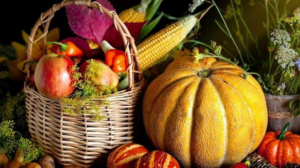
As we celebrate Harvest this year, we give thanks for God’s faithfulness and provision. Yet we do so mindful that, for many farming families, 2026 has been an exceptionally difficult year.
Across the country, arable farmers have seen significantly reduced yields because of challenging weather conditions. One Methodist farmer in Mid Devon reports that his corn harvest is only half that of last year. The summer drought has also taken its toll on livestock farms, with many having to feed winter hay and silage stores during the growing season, raising concerns about fodder supplies for the months ahead.
Alongside these challenges, farmers continue to face the devastating effects of Bluetongue virus (which mainly affects sheep and cattle but also goats, llamas and alpacas) and bird flu.
This Harvest, let us give thanks not only for the food on our tables, but also for the people whose hard work, resilience and perseverance make it possible. Let us remember our farming communities in our prayers, asking God to grant strength where there is weariness, comfort where there is loss and hope where the future seems uncertain.
Harvest reminds us that God’s faithfulness is not measured solely by abundance. Even in seasons of disappointment and struggle, God remains present with us. As we gather to celebrate God’s gifts, may we hold before God all those who work the land and care for livestock, often at great personal cost.
A Prayer for Harvest 2026
Loving God,
We thank you for the gifts of the earth, for the food we enjoy and for all those whose labour brings it to our tables.
We pray today for our farmers, growers and all who work in agriculture. In this particularly difficult year, be their strength when they are weary, their comfort when they are grieving, and their hope when the future feels uncertain.
We remember those whose crops have been diminished by adverse weather, those who have already used precious winter fodder reserves because of drought, and those facing financial worry as a result.
We pray for farmers affected by Bluetongue and avian influenza, especially those who have experienced the loss of livestock, failed pregnancies, infertility within their flocks and herds, and the heartbreak that comes with caring deeply for the animals entrusted to them.
Bless our rural communities, our agricultural chaplains, veterinarians, auction mart staff, farm workers and all who support the farming industry. Give wisdom to those working to combat disease and protect animal welfare.
May all who feel burdened know that they are not forgotten, and may the love of Christ surround every farm, family and community.
As we give thanks this Harvest, help us to be generous in spirit, faithful in prayer and grateful for all that we receive.
In the name of Jesus Christ our Lord.
Amen.
28th August 2026
A Wounded Community – Teesside and Middlesborough
Teesside and Middlesbrough have been in the news a great deal over the last week. The car crash that claimed seven lives, including two police officers and five young men. The house fire that claimed the lives of a woman and her young niece. The alleged links to organised crime. The ramming of homes by vehicles. Each day we hear more in the news, and each day the sense of sadness within the community deepens.
These tragedies affect entire communities, communities that may already feel vulnerable because of economic challenges and feelings of marginalisation. There is fear. There is anger. There is sadness. There are many unanswered questions.
We pray for the victims, their families, the investigators, and those who are caught up in cycles of crime and violence.
We pray, too, for those who are seeking to have their voices heard because they feel they have none. We pray that cycles of revenge and hatred will cease. We pray for healing in the communities and for people to be brought together rather than driven apart. We pray for community leaders as they seek the best way forward. Above all, we pray that the peace of God will be evident in the communities, and that glimpses of the Kingdom of Heaven, revealed through the love of God, will be seen even amid these difficult days.
Loving God, in this time of sadness and uncertainty, we bring before you all those affected by the recent events in Teesside. Comfort those who mourn, strengthen those who serve in these communities, and bring healing to all our communities. Where there is fear, bring peace. Where there is anger, we pray for understanding. Where there is division, we pray for a spirit of community.
We pray for wisdom for all those leading and investigating, hope to those who feel forgotten, and courage to all who seek the good of our communities. May your love be seen in acts of kindness, and your peace rest upon Teesside and Middlesbrough.
Through Jesus Christ our Lord.
Amen.
August 2026
A Prayer for Nepal and Tibet
Communities across Nepal and Tibet are facing devastating loss following floods triggered by a glacier collapse in the Himalayan border region.
The scale and speed of the flooding swept away bridges, damaged roads and cut off communities, making rescue efforts and access to affected areas particularly difficult. Churches across the region are responding, assessing relief needs and preparing response plans as rescue efforts continue. As we hold those affected in prayer, the disaster also reminds us of the growing risks faced by communities in the Himalayas, where shrinking glaciers and a changing climate are contributing to greater environmental instability and making sudden and destructive floods more likely.
Loving God,
We pray for all those affected by the floods in Nepal and Tibet.
Be near to those who mourn the loss of loved ones, and to all who wait in uncertainty for news of family and friends.
Hold close those whose homes, livelihoods and communities have been swept away, and all who are shocked, displaced or afraid.
Strengthen rescue workers, local communities, churches and all who are searching, serving and offering care in the midst of this crisis.
Grant courage and resilience to those waiting for news, facing uncertainty, and fearing the days ahead.
As we witness the growing fragility of creation, renew our commitment to care for one another and for the earth of which we are a part.
In the name of Christ.
Amen.
A Prayer for Colombia
We hold the people of Colombia in prayer after a powerful 7.4 magnitude earthquake struck the west of the country on the 10th August.
Loving God,
We hold the people of Colombia before you today.
We pray for those who are grieving, for those who have been injured, and for those whose homes, livelihoods and communities have been affected by the earthquake.
We give thanks for the courage, compassion and resilience being shown by neighbours, community leaders, emergency responders and churches as they care for one another. Strengthen all those who are responding to this crisis.
We pray especially for the Colombian Methodist Church as it accompanies communities, joining in with the work of recovery and offering your hope to the people they encounter.
Keep us mindful that we are one body in Christ. As communities across Colombia respond with resilience and compassion, help us in Britain to join with them in prayer, friendship and hope.
Amen.
Solar Eclipse (Eye Safety: Never look directly at the sun)
On the evening of 12th August, Western Europe will experience a solar eclipse the likes of which won’t be seen again until 2090.
Key timings in Church Stretton:
Starts: Around 6:10 PM to 6:20 PM
Maximum Peak: Around 7:10 PM to 7:15 PM, low on the western horizon.
Ends: Around 8:00 PM to 8:10 PM
It is a moment when millions of people of all faiths and none will be caught in a shared experience of awe, wonder and transcendence. The Moon will pass between the Earth and the Sun, blocking sunlight for over two minutes.
The importance of awe, wonder and transcendence
Research attests to the psychological and wellbeing benefits of having transcendence in our lives – connecting with something beyond ourselves makes us more compassionate, resilient and social.
For Christians, we see awe and wonder as one of the ways God reveals God-self to us and allows us to connect with the divine.
This connection is one aspect of a deeper relationship. A relationship that is available to all.
“When I look at your heavens, the work of your fingers, the moon and the stars that you have established; what are humans that you are mindful of them, mortals that you care for them?” (Psalm 8:3–4)
Present uncertainty and future hope
Though the eclipse is beautiful, it is also unsettling. Temperatures drop, animals become disturbed and confused, the sun and things around us are obscured.
Often, we find ourselves in periods of great confusion and uncertainty. The eclipse can be a hopeful image for all of us of darkness lasting only a moment, before being bathed again in the full warmth of the sun.
As Christians, our confidence and hope for the future is rooted in what we believe Jesus has already achieved through his death and resurrection.
“The light shines in the darkness, and the darkness has not overcome it.” (John 1:5)
The comfort of celestial rhythms
Though the earth is orbiting the sun at over 100,000 kph and the moon is orbiting the earth at over 3,000 kph, scientists can calculate to the minute when eclipses are going to occur centuries into the future.
Many find it comforting, in a world full of chaos and uncertainty, that when we zoom out some things are still predictable and certain.
For Christians, though we live during much uncertainty, we find hope in a God who is faithful, constant and who holds creation in order and purpose.
“… all things have been created through him and for him… and in him all things hold together.” (Colossians 1:16–17)
There is a pattern in the way that planets move,
the heavens are governed by laws and physics.
We can count on the sun rising, the moon waxing and waning,
the stars shining and comets marking their course.
There is reassurance in the ordering of the universe,
yet still we look on in wonder.
The prophets and wise travellers have for millennia
sought direction from the stars.
Poets continue to wax lyrical about starlight
and celestial symmetry paints constellations
in which we mere human beings
find or seek meaning beyond science.
The reliability (at least for a few more million years),
of the ordered heavens,
sits in sharp contrast to the chaos of earthly
conflict, climate crisis and profound inequality.
This eclipse reminds us of the reliability of God,
reassures us that light will follow darkness and,
even when it seems not to, God sees, knows and loves
all people, even us, just as we are in all our chaos.
Michaela Youngson
Plastic Free July
The Methodist Church is urging us all to try and cut down on the amount of plastic we use during July. On the Eco Church notice board in the church hall is an opportunity to write down how you might manage to do this.
Share your ideas with others.
Venezuelan Earthquake Appeal
The Disaster Emergency Committee have set up an appeal for Venezuela following the devastating earthquakes. Donations will be collected at church over the next two weeks. Thank you.
7th June 2026
Churches Together in the Strettons
Enjoy a picnic together in St Milburga’s presbytery and gardens. A time of friendship and fellowship.
17th August 2025
Churches Together in the Strettons
A Sunday afternoon guided walk has been organised across High Leasowes, four developing wildflower meadows, high in wildlife. Peter Whitlock will show us how the area is being developed into a haven for nature. The fields, in all 6.5 hectares were saved by the community for the community and are being created into a patchwork of rich habitats that provides shelter, nesting and feeding opportunities for a great variety of wildlife, where there is space for people to walk and quietly enjoy the area and for the community to participate in its care. Followed by tea and cake in the church hall.